Download this app from Microsoft Store for Windows 10, Windows 8.1, Windows 10 Mobile, Windows Phone 8.1, Windows 10 Team (Surface Hub), HoloLens. See screenshots, read the latest customer reviews, and compare ratings for Microsoft Remote Desktop. RDP wouldn't work, run netstat, which showed the port was missing. All RDP settings are correct and the service is running. Uninstalled a Windows update, which fixed the problem but now it is intermittent. A rebuild might be quicker in the long run but I would really rather not.
- Rdp Client 8.1 Windows 7
- Repair Remote Desktop Client Windows 7
- Reinstall Rdp Client Windows 7 Download
- Repair Rdp Client Windows 7
- Rdp Update Windows 7
Rdp Client 8.1 Windows 7
-->You can find more detailed information about the Windows Desktop client at Get started with the Windows Desktop client. You'll find the latest updates to client in this article.
Supported client versions
The client can be configured for different user groups. The following table lists the current versions available for each user group:
| User group | Latest version | Minimum supported version |
|---|---|---|
| Public | 1.2.1524 | 1.2.945 |
| Insider | 1.2.1524 | 1.2.945 |
Updates for version 1.2.1524
Date published: 12/01/2020
Download: Windows 64-bit, Windows 32-bit, Windows ARM64
- Added List view for remote resources so that longer app names are readable.
- Added a notification icon that appears when an update for the client is available.
Updates for version 1.2.1446
Date published: 10/27/2020
Download: Windows 64-bit, Windows 32-bit, Windows ARM64
- Added the auto-update feature, which allows the client to install the latest updates automatically.
- The client now distinguishes between different feeds in the Connection Center.
- Fixed an issue where the subscription account doesn't match the account the user signed in with.
- Fixed an issue where some users couldn't access remote apps through a downloaded file.
- Fixed an issue with Smartcard redirection.
Updates for version 1.2.1364
Date published: 09/22/2020
- Fixed an issue where single sign-on (SSO) didn't work on Windows 7.
- Fixed the connection failure that happened when calling or joining a Teams call while another app has an audio stream opened in exclusive mode and when media optimization for Teams is enabled.
- Fixed a failure to enumerate audio or video devices in Teams when media optimization for Teams is enabled.
- Added a 'Need help with settings?' link to the desktop settings page.
- Fixed an issue with the 'Subscribe' button that happened when using high-contrast dark themes.
Updates for version 1.2.1275
Date published: 08/25/2020
- Added functionality to auto-detect sovereign clouds from the user’s identity.
- Added functionality to enable custom URL subscriptions for all users.
- Fixed an issue with app pinning on the feed taskbar.
- Fixed a crash when subscribing with URL.
- Improved experience when dragging remote app windows with touch or pen.
- Fixed an issue with localization.
Updates for version 1.2.1186
Date published: 07/28/2020
- You can now be subscribed to Workspaces with multiple user accounts, using the overflow menu (...) option on the command bar at the top of the client. To differentiate Workspaces, the Workspace titles now include the username, as do all app shortcuts titles.
- Added additional information to subscription error messages to improve troubleshooting.
- The collapsed/expanded state of Workspaces is now preserved during a refresh.
- Added a Send Diagnostics and Close button to the Connection information dialog.
- Fixed an issue with the CTRL + SHIFT keys in remote sessions.
Updates for version 1.2.1104
Date published: 06/23/2020
- Updated the automatic discovery logic for the Subscribe option to support the Azure Resource Manager-integrated version of Windows Virtual Desktop. Customers with only Windows Virtual Desktop resources should no longer need to provide consent for Windows Virtual Desktop (classic).
- Improved support for high-DPI devices with scale factor up to 400%.
- Fixed an issue where the disconnect dialog didn't appear.
- Fixed an issue where command bar tooltips would remain visible longer than expected.
- Fixed a crash when you tried to subscribe immediately after a refresh.
- Fixed a crash from incorrect parsing of date and time in some languages.
Updates for version 1.2.1026
Date published: 05/27/2020
- When subscribing, you can now choose your account instead of typing your email address.
- Added a new Subscribe with URL option that allows you to specify the URL of the Workspace you are subscribing to or leverage email discovery when available in cases where we can't automatically find your resources. This is similar to the subscription process in the other Remote Desktop clients. This can be used to subscribe directly to Windows Virtual Desktop workspaces.
- Added support to subscribe to a Workspace using a new URI scheme that can be sent in an email to users or added to a support website.
- Added a new Connection information dialog that provides client, network, and server details for desktop and app sessions. You can access the dialog from the connection bar in full screen mode or from the System menu when windowed.
- Desktop sessions launched in windowed mode now always maximize instead of going full screen when maximizing the window. Use the Full screen option from the system menu to enter full screen.
- The Unsubscribe prompt now displays a warning icon and shows the workspace names as a bulleted list.
- Added the details section to additional error dialogs to help diagnose issues.
- Added a timestamp to the details section of error dialogs.
- Fixed an issue where the RDP file setting desktop size ID didn't work properly.
- Fixed an issue where the Update the resolution on resize display setting didn't apply after launching the session.
- Fixed localization issues in the desktop settings panel.
- Fixed the size of the focus box when tabbing through controls on the desktop settings panel.
- Fixed an issue causing the resource names to be difficult to read in high contrast mode.
- Fixed an issue causing the update notification in the action center to be shown more than once a day.
Updates for version 1.2.945
Date published: 04/28/2020
- Added new display settings options for desktop connections available when right-clicking a desktop icon on the Connection Center.
- There are now three display configuration options: All displays, Single display and Select displays.
- We now only show available settings when a display configuration is selected.
- In Select display mode, a new Maximize to current displays option allows you to dynamically change the displays used for the session without reconnecting. When enabled, maximizing the session causes it to go full screen on all displays touched by the session window.
- We've added a new Single display when windowed option for all displays and select displays modes. This option switches your session automatically to a single display when you exit full screen mode, and automatically returns to multiple displays when you maximize the window.
- We've added a new Display settings group to the system menu that appears when you right-click the title bar of a windowed desktop session. This will let you change some settings dynamically during a session. For example, you can change the new Single display mode when windowed and Maximize to current displays settings.
- When you exit full screen, the session window will return to its original location when you first entered full screen.
- The background refresh for Workspaces has been changed to every four hours instead of every hour. A refresh now happens automatically when launching the client.
- Resetting your user data from the About page now redirects to the Connection Center when completed instead of closing the client.
- The items in the system menu for desktop connections were reordered and the Help topic now points to the client documentation.
- Addressed some accessibility issues with tab navigation and screen readers.
- Fixed an issue where the Azure Active Directory authentication dialog appeared behind the session window.
- Fixed a flickering and shrinking issue when dragging a desktop session window between displays of different scale factors.
- Fixed an error that occurred when redirecting cameras.
- Fixed multiple crashes to improve reliability.
Updates for version 1.2.790
Date published: 03/24/2020
- Renamed the 'Update' action for Workspaces to 'Refresh' for consistency with other Remote Desktop clients.
- You can now refresh a Workspace directly from its context menu.
- Manually refreshing a Workspace now ensures all local content is updated.
- You can now reset the client's user data from the About page without needing to uninstall the app.
- You can also reset the client's user data using msrdcw.exe /reset with an optional /f parameter to skip the prompt.
- We now automatically look for a client update when navigating to the About page.
- Updated the color of the buttons for consistency.
Updates for version 1.2.675
Date published: 02/25/2020
- Connections to Windows Virtual Desktop are now blocked if the RDP file is missing the signature or one of the signscope properties has been modified.
- When a Workspace is empty or has been removed, the Connection Center no longer appears to be empty.
- Added the activity ID and error code on disconnect messages to improve troubleshooting. You can copy the dialog message with Ctrl+C.
- Fixed an issue that caused the desktop connection settings to not detect displays.
- Client updates no longer automatically restart the PC.
- Windowless icons should no longer appear on the taskbar.
Updates for version 1.2.605
Date published: 01/29/2020
- You can now select which displays to use for desktop connections. To change this setting, right-click the icon of the desktop connection and select Settings.
- Fixed an issue where the connection settings didn't display the correct available scale factors.
- Fixed an issue where Narrator couldn't read the dialogue shown while the connection initiated.
- Fixed an issue where the wrong user name displayed when the Azure Active Directory and Active Directory names didn't match.
- Fixed an issue that made the client stop responding when initiating a connection while not connected to a network.
- Fixed an issue that caused the client to stop responding when attaching a headset.
Updates for version 1.2.535
Date published: 12/04/2019
- You can now access information about updates directly from the more options button on the command bar at the top of the client.
- You can now report feedback from the command bar of the client.
- The Feedback option is now only shown if the Feedback Hub is available.
- Ensured the update notification is not shown when notifications are disabled through policy.
- Fixed an issue that prevented some RDP files from launching.
- Fixed a crash on startup of the client caused by corruption of some persistent settings.
Updates for version 1.2.431
Date published: 11/12/2019
- The 32-bit and ARM64 versions of the client are now available!
- The client now saves any changes you make to the connection bar (such as its position, size, and pinned state) and applies those changes across sessions.
- Updated gateway information and connection status dialogs.
- Addressed an issue that caused two credentials to prompt at the same time while trying to connect after the Azure Active Directory token expired.
- On Windows 7, users are now properly prompted for credentials if they had saved credentials when the server disallows it.
- The Azure Active Directory prompt now appears in front of the connection window when reconnecting.
- Items pinned to the taskbar are now updated during a feed refresh.
- Improved scrolling on the Connection Center when using touch.
- Removed the empty line from the resolution drop-down menu.
- Removed unnecessary entries in Windows Credential Manager.
- Desktop sessions are now properly sized when exiting full screen.
- The RemoteApp disconnection dialog now appears in the foreground when you resume your session after entering sleep mode.
- Addressed accessibility issues like keyboard navigation.
Updates for version 1.2.247
Date published: 09/17/2019
- Improved the fallback languages for localized version. (For example, FR-CA will properly display in French instead of English.)
- When removing a subscription, the client now properly removes the saved credentials from Credential Manager.
- The client update process is now unattended once started and the client will relaunch once completed.
- The client can now be used on Windows 10 in S mode.
- Fixed an issue that caused the update process to fail for users with a space in their username.
- Fixed a crash that happened when authenticating during a connection.
- Fixed a crash that happened when closing the client.
Windows 7 Remote Desktop Connection Problems
Troubleshooting a remote desktop connection involves understanding the role of both the distant network host and the local client computer.
Key question: do we have the perfect world where both operating systems are Windows 7? Or is one of the connections Vista, XP, or even a member of the Windows server family?
Topics for Windows Remote Desktop Connection Problems
♦
Configure the Host Computer – Allow Connections
The situation is that you leave a Windows 7 machine running and wander to another Windows 7 machine on the same network. You want to check the email, or find an address in your contacts list. It’s a long walk back to the other machine so you decide to Remote Desktop. Fingers crossed that you have configured your own host machine to accept Remote Desktop connections from the client. This where you check:
Start Orb, Control Panel, System and Security, System, Remote Settings (Left menu), Allow Desktop (Section), Allow connections from computers
You can fine-tune the configuration by specifying users, or restricting the type of remote computer.
A Backdoor Registry Hack – fDenyTSConnections
There is a ‘backdoor’ registry hack whereby you can set Remote Desktop to allow connections. Let us imagine that you cannot remote desktop because on the host the radio button in the above screenshot is set to: Don’t allow connections to this computer. My zany technique involves editing the registry of the target machine. My idea succeeds or fails on the ability of regedit to Connect to network registry.
Note: You may have to Start the Remote Registry Service on the target machine. See here for a PowerShell script to start services.
Now our mission is to change the value of fDenyTSConnections from =1 to =0. Open regedit, File Menu, Connect Network Registry. Naturally, you have to connect to the correct registry hive on the target machine,
HKLMSystemCurrentControlSetControlTerminal Server, now find the Reg_DWord called fDenyTSConnections and set the value = 0 (zero)
Unfortunately, you have to reboot the target machine before the fDenyTSConnections setting takes effect. There must be service that you could start and stop but I have not found which one that is. Instead I use the following PowerShell command.
Guy Recommends: SolarWinds Free Wake-On-LAN Utility
Encouraging computers to sleep when they’re not in use is a great idea – until you are away from your desk and need a file on that remote sleeping machine!
WOL also has business uses for example, rousing machines so that they can have update patches applied. My real reason for recommending you download this free tool is because it’s so much fun sending those ‘Magic Packets’. Give WOL a try – it’s free.
Configuring Remote Desktop Connection on the Client Computer
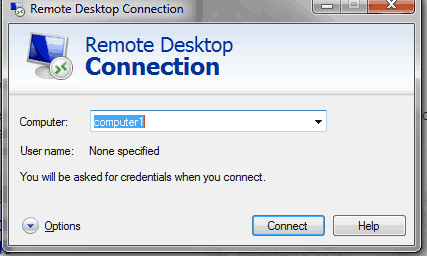
The situation is that you have configured the host (remote / network) computer to allow connections. Now you want to launch the Remote Desktop Connection on the local client. To access mstsc.exe, click on the Windows Start Orb and in the Search dialog box, type Remote Desktop.
Double Click on Remote Desktop Connection – See screenshot.

Repair Remote Desktop Client Windows 7
Type the name of the computer that you wish to access. I also advise you to examine the Options before you click ‘Connect’.
Problems with Remote Desktop Connection in Windows 7
Installing the program mstsc.exe rarely gives problems. Thus troubleshooting focuses on network connectivity and permissions. Once you get a basic remote desktop connection, there is potential for a whole set of new problems, for example, features such as printing or Aero Graphics don’t work.
Basic Troubleshooting Techniques to Get a Connection
Editions of Windows 7
The host computer, the distant one that you connect to, must be Windows 7 Professional, Business or Ultimate. However, the client can be running the home premium edition. The host could also be Vista, XP or even a Windows Server.
Hostname Problems – Remote Desktop cannot find computer…
Try connecting to an IP address rather than a computer name. Use ping to test the network connection, if there is a problem check the Host records at the DNS server.
If you have selected Network Level Authentication then you must type the full computer name at the client. For example mycomputer.local and not plain mycomputer. If in doubt, try ping mycomputer. The surest alternative is to check in the Control Panel, System and Security, System: Full computer name.
Enter Your Credentials
Make the connection to the host with a username that has previously logged on at that computer. Check in the Control Panel of the host machine to see that the user has permission to use remote desktop.
Firewalls
Disable the firewalls on both the local and remote computer. All other experts castigate me for this technique, but I do it to remove one variable and to free my mind; turning off the firewalls forces me to focus on other sources of configuration mistakes.
SolarWinds Firewall Browser
Here is an utility where you can review firewall settings such as access control lists (ACL), or troubleshoot problems with network address translation (NAT).
Other reasons to download this SolarWinds Firewall Browser include managing requests to change your firewall settings, and testing firewall rules before you go live.
Guy recommends that you download a copy of the SolarWinds free Firewall Browser.
Reinstall Rdp Client Windows 7 Download
Problems Once You Make a Remote Desktop Connection
For problems relating to local resources, or Flip 3D, then check the Options button (see above), then examine the six tabs that you see in the screenshot to the right.
Aero Graphics
For a reason that I cannot fathom the ‘Experience’ defaults to the slowest connection ‘Modem’, thus if you have a high speed connection you miss out on Aero Graphics effects unless you select ‘LAN’.
Printers
As usual, printers give their fair share of problems. My advice is to go to the ‘Local Resources’ tab and experiment with, and without, the tick in the Printers box.
Save Credentials
I like to reduce hassle by saving credentials in the General tab. While it's not a problem in a HomeGroup, if the computers belong to a domain then you need to change this group policy.
- Logon as an administrator.
- Click the Start orb, in the ‘Search’ box type: gpedit.msc.
- Navigate to the Computer Configuration, Administrative Templates, System, and then Credentials Delegation.
- In the right pane, double-click Allow Saved Credentials with NTLM-only Server Authentication, click Enabled, and then click Show.
- In the Show Contents dialog box, click Add, type the name of the remote computer (server) in this format: TERMSRV<computername>
- It maybe worth reading the help notes; for example, make sure you capitalize TERMSRV. Also, you could try using the asterisk * as a wildcard as in: TERMSRV*
Guy Recommends: A Free Trial of the Network Performance Monitor (NPM) v11.5
SolarWinds’ Orion performance monitor will help you discover what’s happening on your network. This utility will also guide you through troubleshooting; the dashboard will indicate whether the root cause is a broken link, faulty equipment or resource overload.
What I like best is the way NPM suggests solutions to network problems. Its also has the ability to monitor the health of individual VMware virtual machines. If you are interested in troubleshooting, and creating network maps, then I recommend that you try NPM now.
Remote Server Administration Tools (RSAT)
In addition to its use for an ordinary user to connect to a client desktop, the same remote connection technology can also be used for an administrator to connect to a Windows server.
Remote Server Administration Tools (RSAT) for Windows 7 allows administrators to remotely manage roles and features, which are installed on a member of the Windows Server family. However, you have to be running the Enterprise, Professional, or Ultimate editions of Windows 7 to successfully install this add-on to manage the servers.
- Make sure that are at the Windows 7 computer, download the Remote Server Administration Tools for Windows 7 MSU package from the Microsoft Download Center.
- Open the RSAT package and install it.
- Click on the Start Orb, Control Panel, and then click Programs.
In the Programs and Features area, click Turn Windows features on or off. - In the Windows Features dialog box, expand Remote Server Administration Tools. Select the remote management tools that you want to install.
- Pin a shortcut to the Start menu or the Taskbar
»
Summary of Troubleshooting Windows 7 Remote Desktop Connection
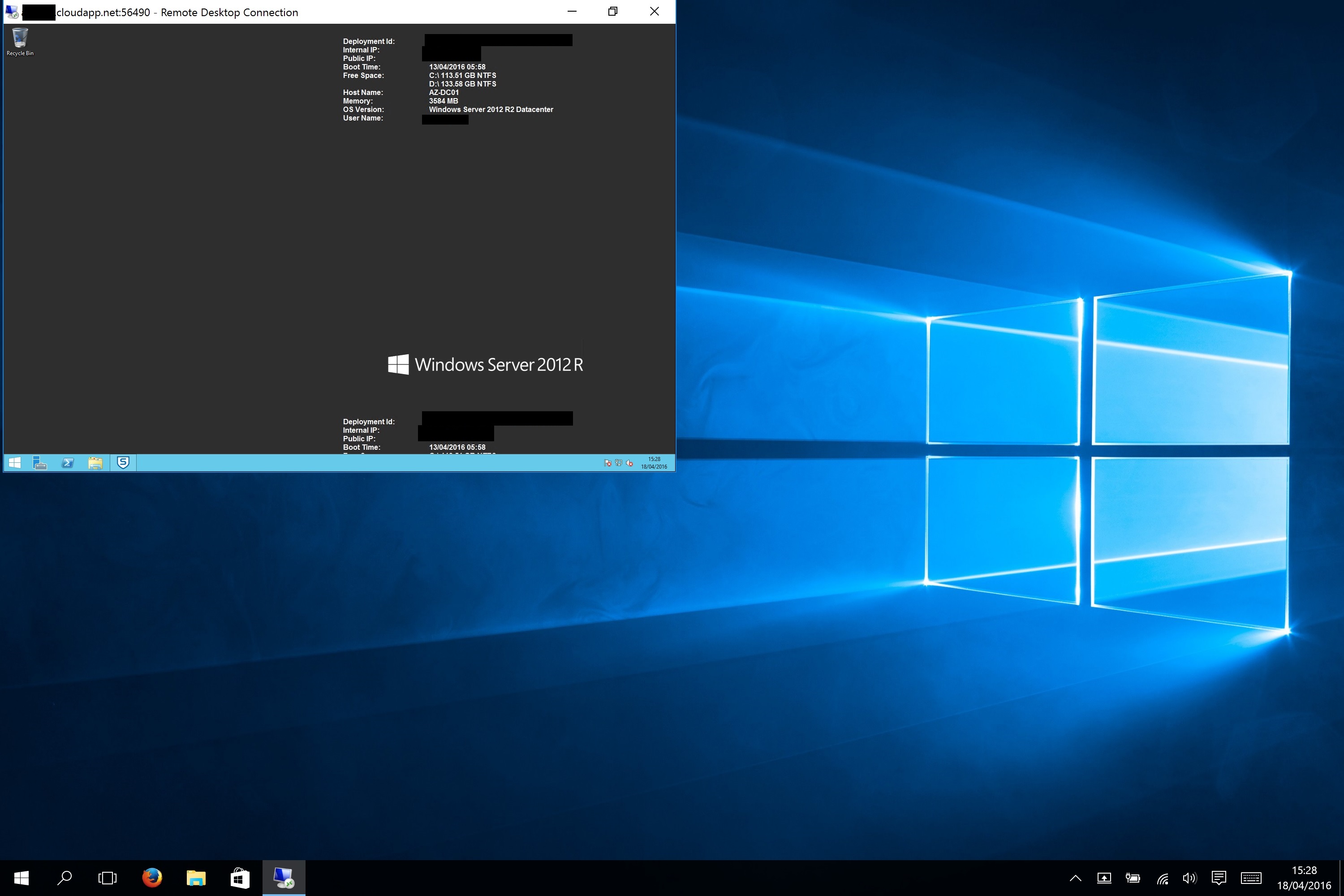
The first step in troubleshooting is to check that the distant network computer is setup to allow remote desktop connections. On the client computer test with ping that you can contact the target machine. Once you can make a basic connection examine each tab in the Options.
If you like this page then please share it with your friends
Microsoft Windows 7 Network Topics
Repair Rdp Client Windows 7
• Windows 7 • Windows 7 Network Adapter Connection • Windows 7 Network Monitor
Rdp Update Windows 7
• Windows 8 Network Location • Windows 7 Private Network • Review of SolarWinds TFTP Server
• Windows 8 Configuration • Windows 8 Metro UI • Windows 8 Wireless • Network Performance Monitor
Comments are closed.